Discover how Southern Norway’s culture is reflected in its architecture, art, and living traditions.
From contemporary coastal buildings to centuries-old farmsteads, this route shows how landscape, history, and craftsmanship come together. Southern Norway offers a unique combination: modern architecture, historic wooden towns, inland valleys shaped by centuries of culture, and vibrant traditions that are still alive today. Within a few hours, you can move from coastal landmarks to rural villages, exploring art, architecture, and culture at every stop.
1st STOP: KRISTIANSAND
MODERNITY MEETS TRADITION
Start your journey in Kristiansand, where contemporary architecture stands alongside historic streets.
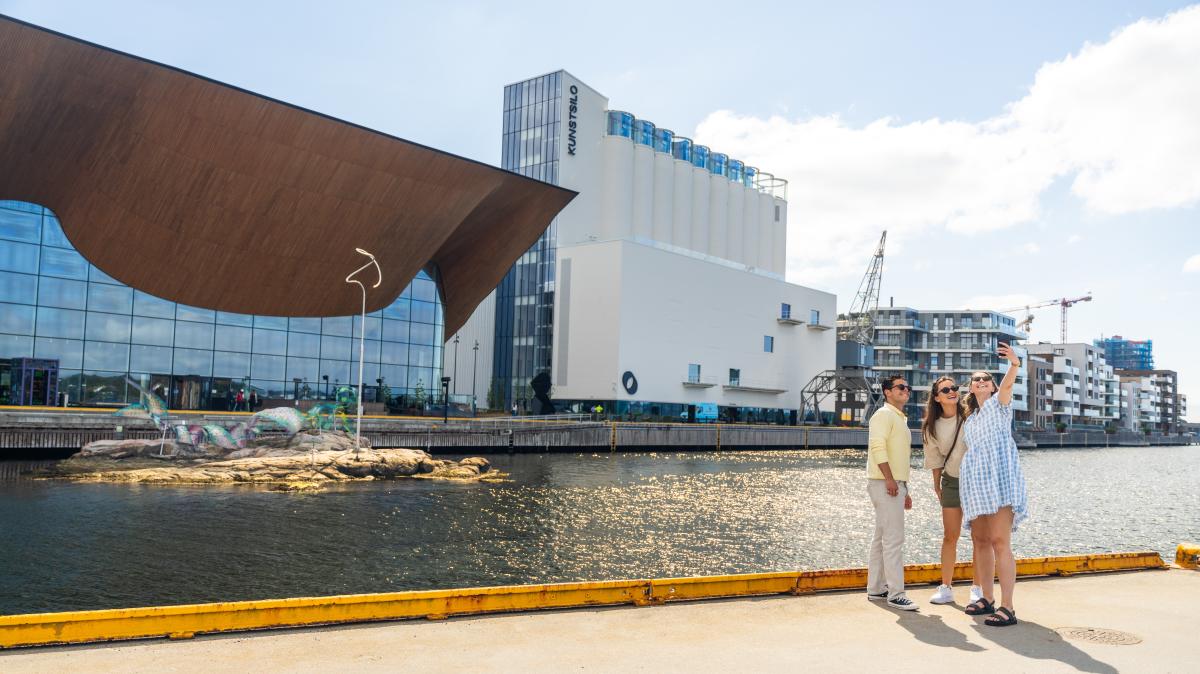
Visit Kunstsilo, the museum that was awarded "the world's most beautiful museum": a former grain silo turned art museum. Its industrial structure now houses exhibitions of Norwegian and international contemporary art, making the building itself an unforgettable experience.
Next, see Kilden Theatre and Concert Hall, with its striking curved wooden façade facing the sea. It’s a masterful example of modern design inspired by coastal landscapes.
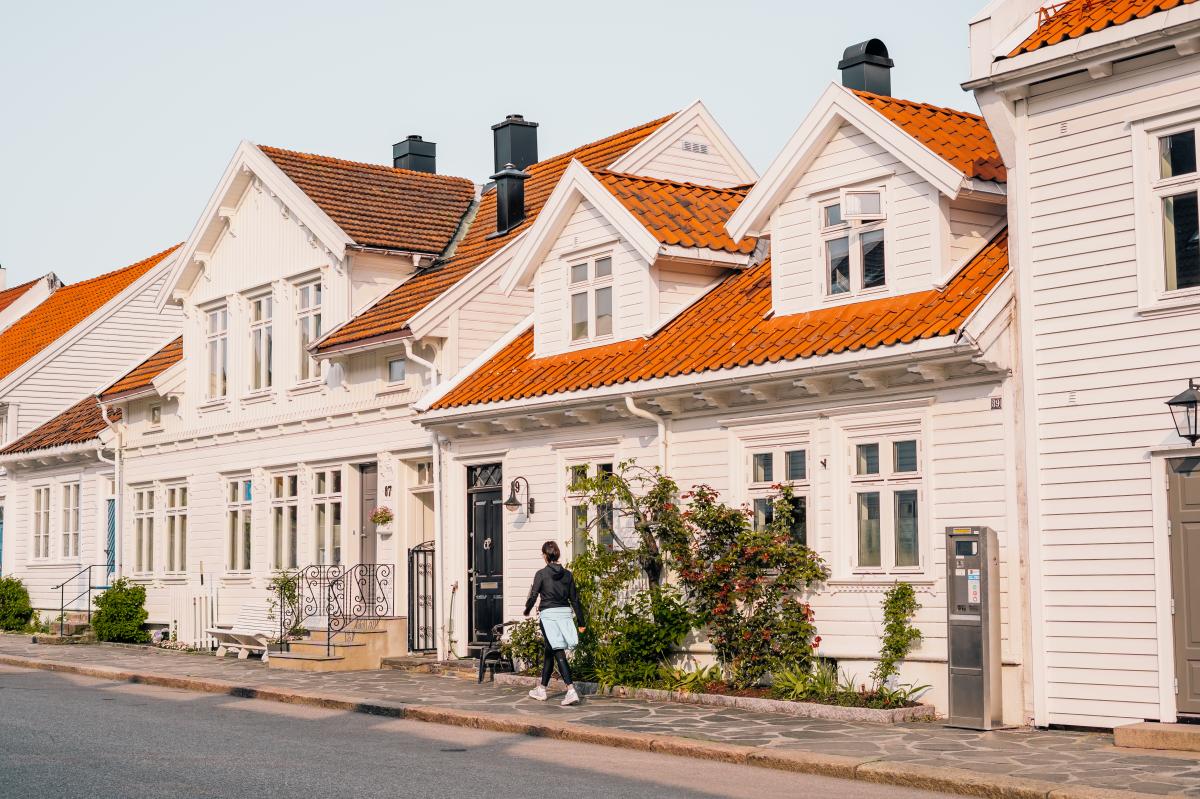
Then wander through Posebyen, one of the best-preserved wooden house districts in Northern Europe. Narrow streets, white-painted houses, and intricate woodwork give a sense of life in a coastal town centuries ago.
Here, every corner tells a story, from daily life to historic craftsmanship.
Photo:
Foto: Gerd Corrigan
2nd STOP: ARENDAL
COASTAL CULTURE & CITY IDENTITY
Travel east from Kristiansand to Arendal, a historic coastal town shaped by maritime life.
Start at KUBEN Museum, where exhibitions tell the story of the region’s coastal culture, shipping history, and local art. The museum itself blends traditional building materials with modern design.
Next, head to the Fløyheia glass elevator. This modern installation takes you above the town for panoramic views of Arendal, the harbour, and surrounding islands, a striking contrast to the town’s historic streets.
Photo:
Frida Neverdal / Visit Sørlandet
Finally, stroll through Tyholmen, Arendal’s old town. Its narrow streets and white-painted wooden houses reflect centuries of coastal life and traditional architecture.
Small cafés, artisan shops, and subtle architectural details bring the past into the present, making this part of town both picturesque and culturally rich.
Photo:
Anders Martinsen Fotografer
3rd STOP: SETESDAL
LIVING TRADITION & CRAFTSMANSHIP
Head inland to Setesdal, where traditions are still visible in both architecture and everyday life.
Visit Rygnestadtunet, a well-preserved cluster of traditional wooden buildings. These farmsteads show how architecture was shaped by climate, materials and the way of life.
Photo:
Adrian Leversby, Visit Norway
Continue to Sølvgarden, where traditional craftsmanship is still practiced today. Here, local silversmiths create and showcase the distinctive silver jewellery that is an important part of Setesdal’s cultural heritage.
The building itself reflects regional materials and design, connecting past and present in a natural way.
In Setesdal, culture is not only something you visit; it is something you encounter, shaped by people, traditions and everyday life.
Photo:
Sølvgarden hotell og smie, Rysstad
Silversmithing remains a living tradition in Setesdal, often carried through generations. Here, you can see the craftsmanship up close and buy the jewellery where it is made.
Nearby, a new chapter of Norwegian architectural history is taking shape. In Rysstad, a full-scale stave church is currently being built using traditional methods without any modern machinery.
Setesdal is also known for its strong cultural heritage. Traditional music and dance from the valley are inscribed on UNESCO’s Representative List of the Intangible Cultural Heritage of Humanity.